The Stellar Corridor
sci-fi

The Stellar Corridor

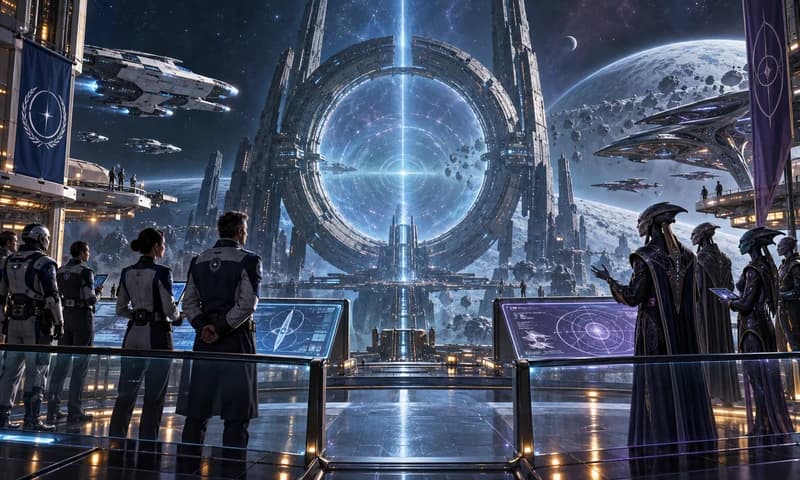
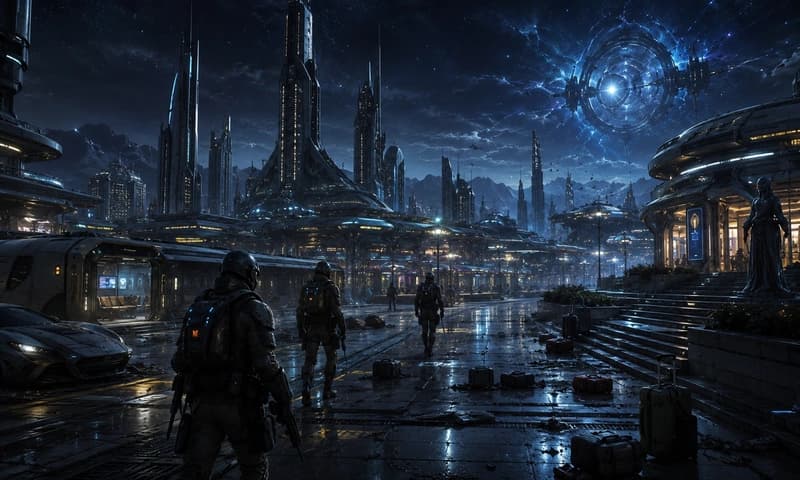
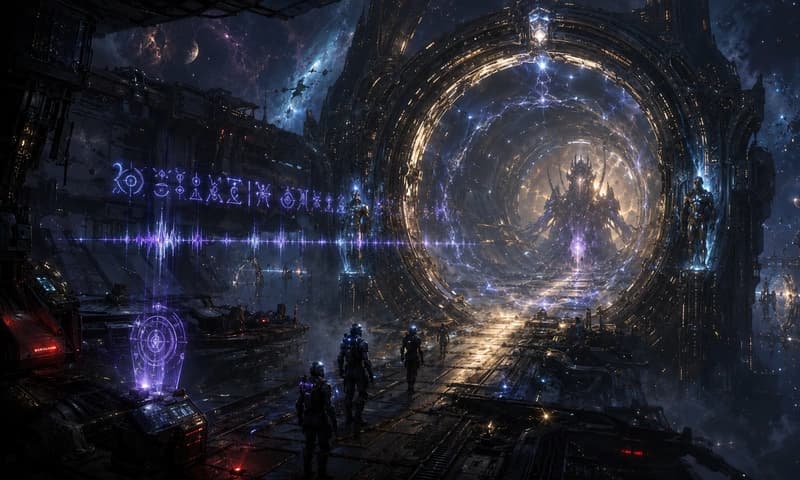
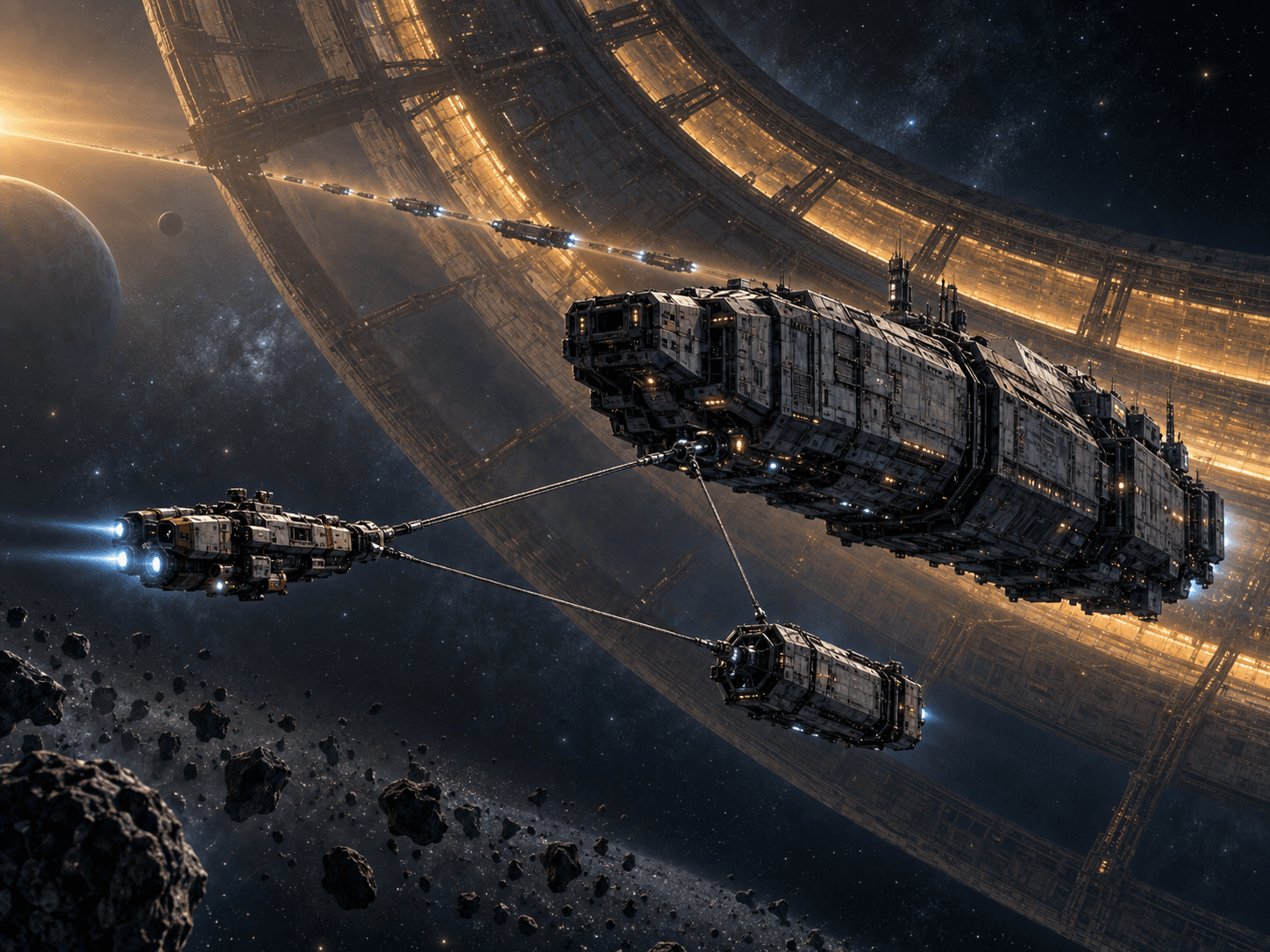
Year 2387. Humanity has settled 47 solar systems, linked by the Stellar Corridor — a network of passages the First Ones built roughly 1.2 million years ago and then left behind. The network is automatic material infrastructure: it has no mind and no will, its nodes lead to fixed destinations, and it has begun to reactivate in phases. The Confederation, formed forty years ago in answer to the first wave of reactivations, now faces the question that runs through everything: who has the right to decide which passages open, who may use them, and who bears the consequences?

The Stellar Corridor

Explore the World

Year 2387. Humanity has settled 47 solar systems, linked by the Stellar Corridor — a network of passages the First Ones built roughly 1.2 million years ago and then left behind. The network is automatic material infrastructure: it has no mind and no will, its nodes lead to fixed destinations, and it has begun to reactivate in phases. The Confederation, formed forty years ago in answer to the first wave of reactivations, now faces the question that runs through everything: who has the right to decide which passages open, who may use them, and who bears the consequences?

The First Ones built the Corridor network roughly 1.2 million years ago and vanished, leaving only the infrastructure; they are not a deus ex machina, and their disappearance is not a key that explains everything. Maps, remnants and node correlations suggest on the order of 300 systems in the wider network — an estimate, not a full list of what humans can reach. Other intelligent civilizations exist, but they are not catalogued here as a roster of races. The network is automatic material infrastructure: no consciousness, no will; it does not choose peoples or civilizations, does not react to emotion, and does not learn the player. Its nodes have concrete destinations and three states — inactive, active stable, active unstable — and reactivation proceeds in phases, every scenario-level change of activity, routing or stability preceded by an observable precursor. Modern civilizations can use, diagnose and partly repair the infrastructure, but cannot reproduce the whole technology of the First Ones. The Confederation formed about forty years ago as a political response to the first wave of reactivations. At heart the Stellar Corridor is infrastructural expansion without sufficient knowledge — and the politics of who controls it.

Map

Territory, routes and pressure points.

Cartographic layer in progress

This world does not have a public map asset yet.

Field bestiary

Life in the places people leave behind.

The Corridor is not empty between its routes. These are dangerous organisms, not factions, and none carry an answer about the First Ones.

Shellbacks

threshold predators
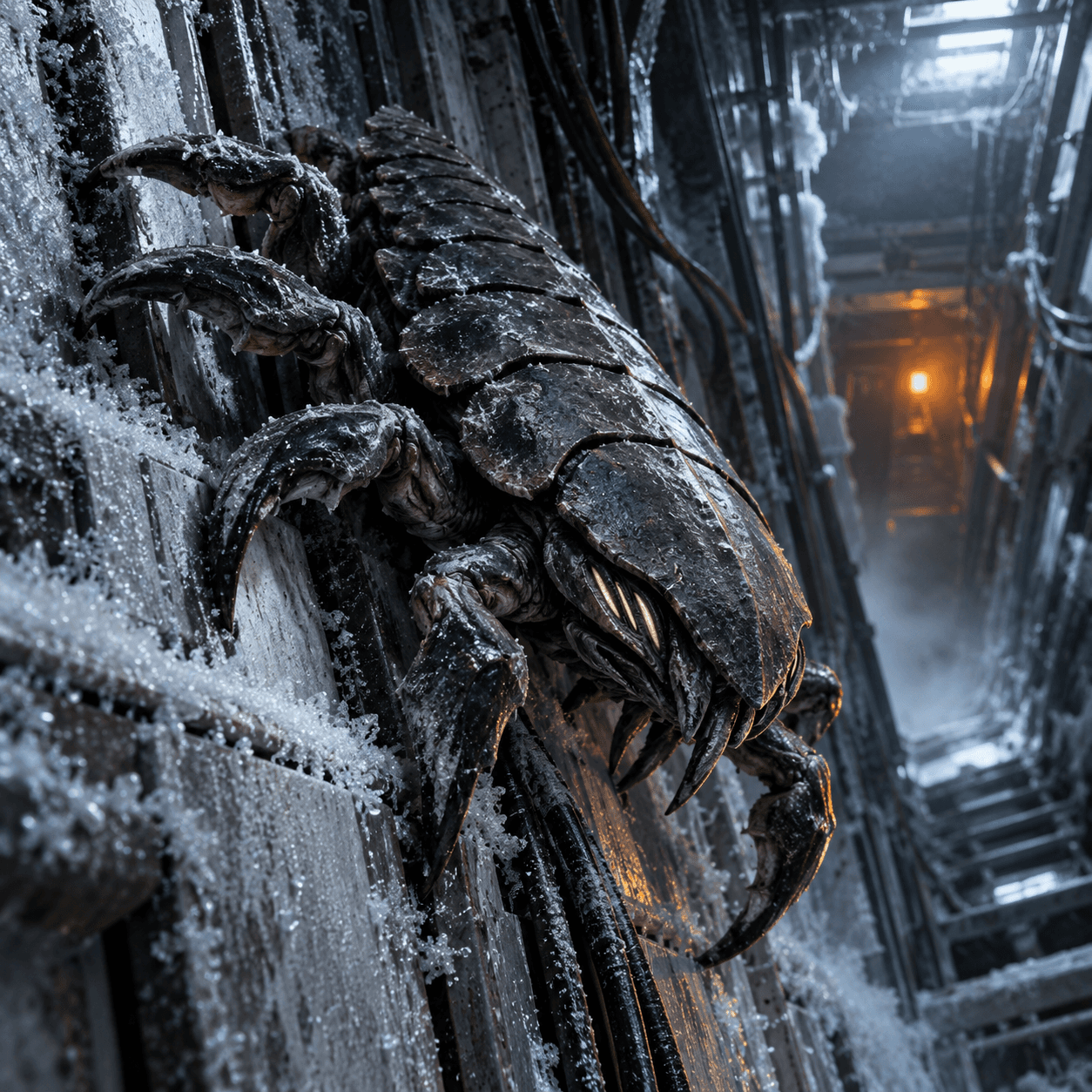
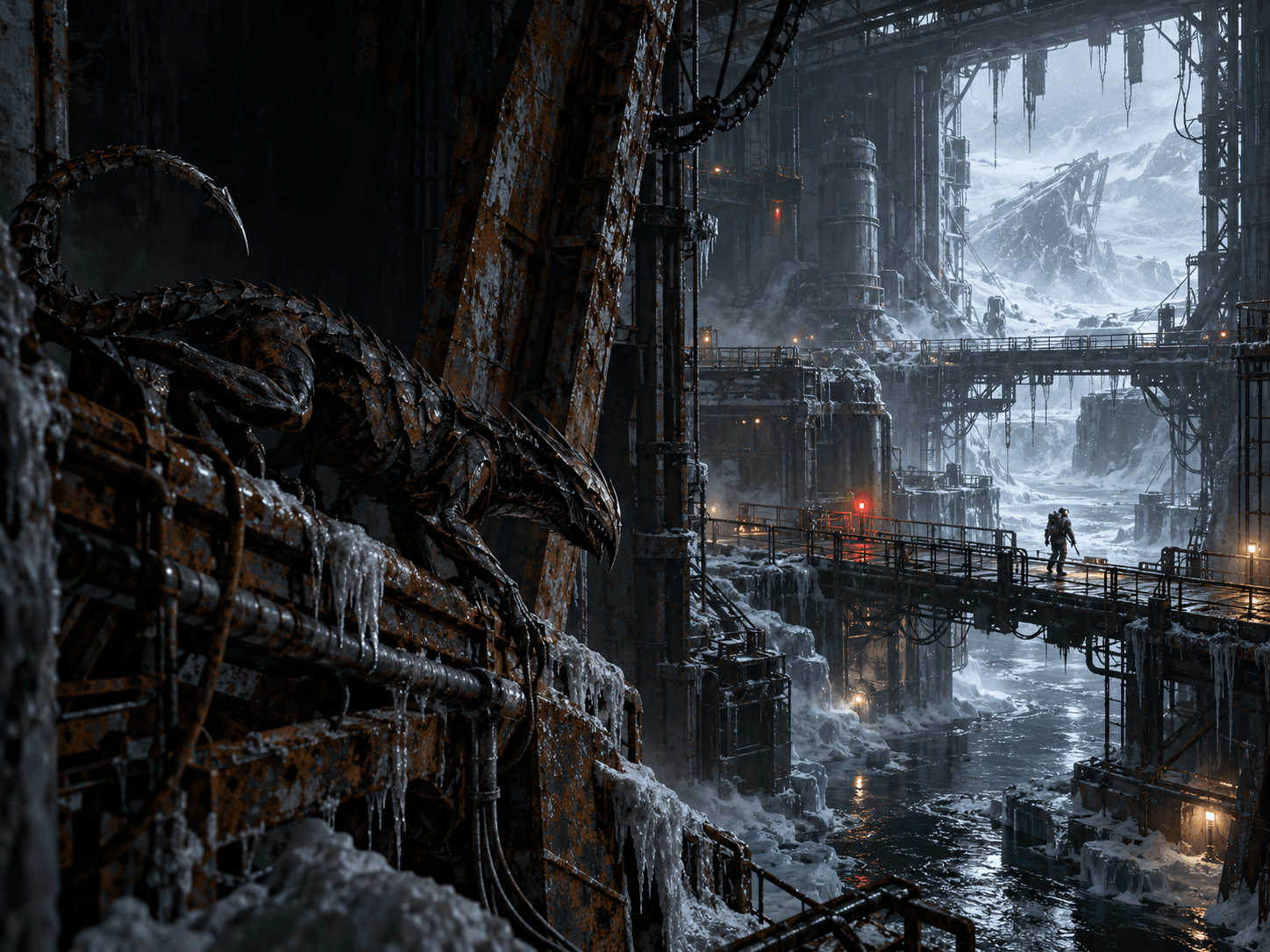
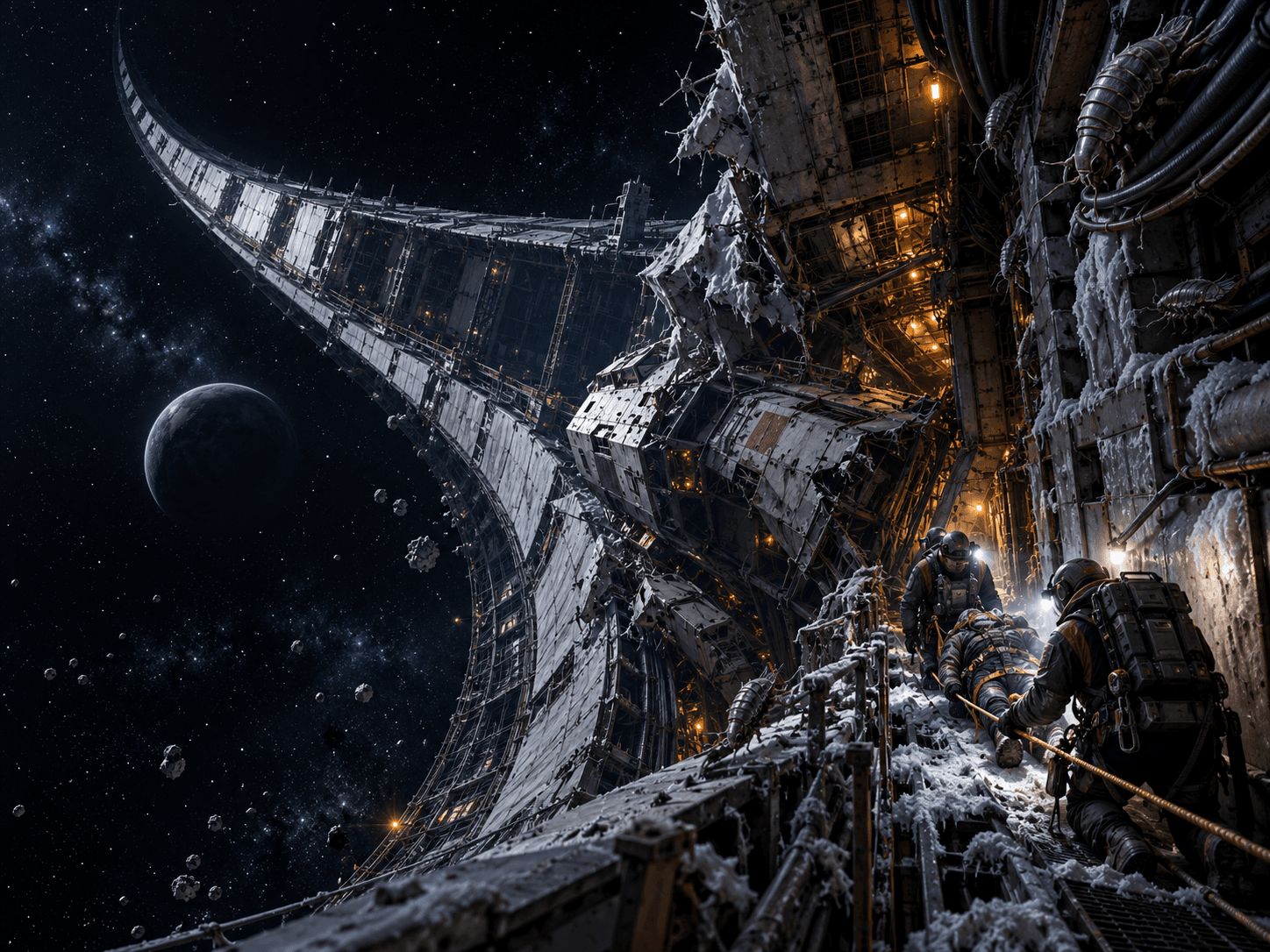
A Shellback clinging to a frost-covered service shaft

Flat, plated threshold predators first documented in the wreck of the Reliable. They crossed during an earlier breach and endured in the cold until heat, vibration and living bodies woke them.

Habitat
Cold wrecks, dead service works and narrow shafts touched by a historical breach.
Hazard
A disturbed cluster follows heat, vibration and exposed tissue. It worries suit seals, strips protection and can drag a wounded person into a service shaft.
Field response
Strong work lights and sustained heat can disorient or redirect them, not make them safe. Both consume scarce power and may drive the cluster toward another warm body.
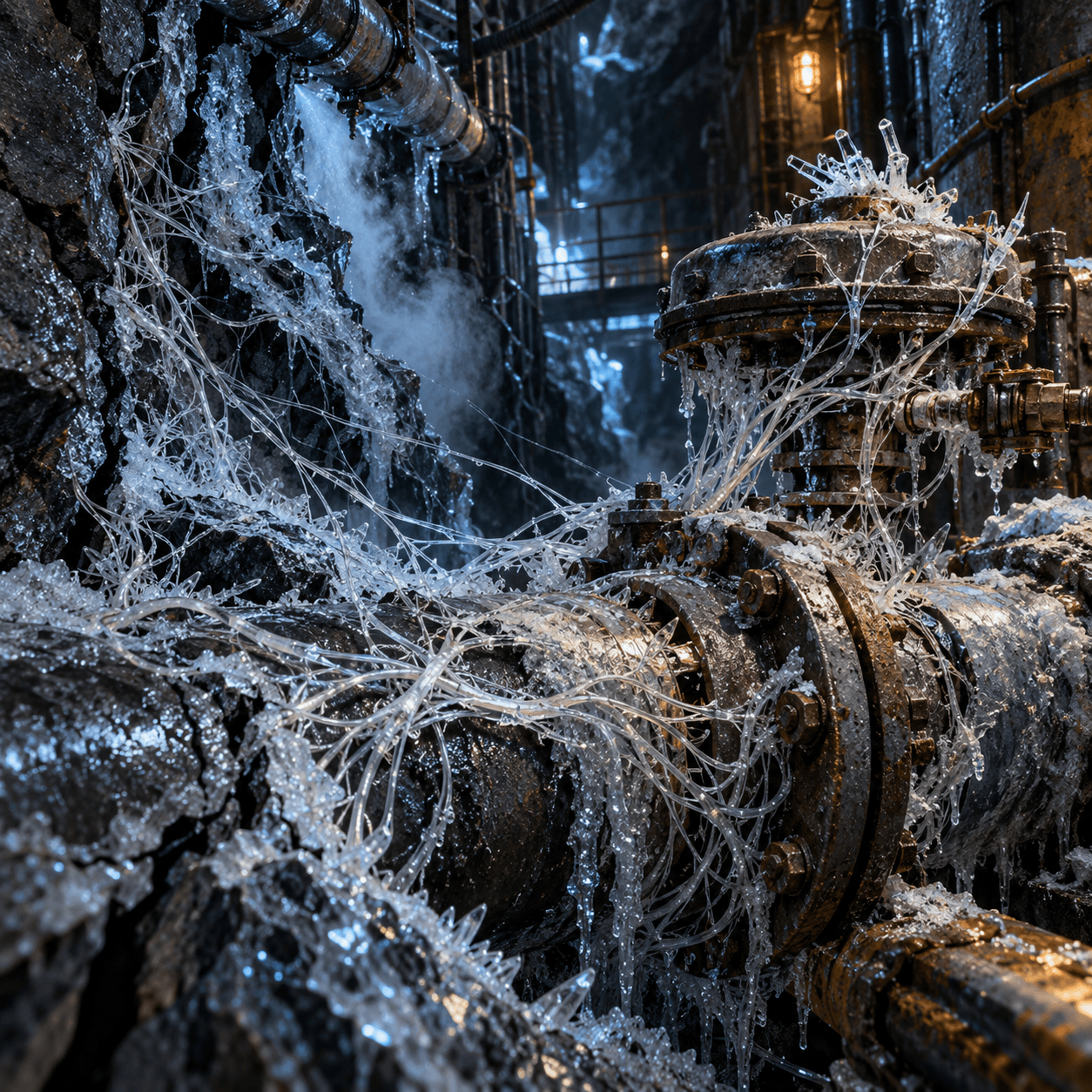
Fissurelings

ice-fissure colonies

Fissurelings spreading through a frozen coolant valve

Thread-thin, mineral-bodied scavengers that lie dormant in comet ice, rock seams and frozen coolant lines.

Habitat
Asteroid tunnels, ice haulers and frozen refinery infrastructure.
Hazard
When thawed, they spread through hairline fractures, clog valves and turn a minor leak into a structural failure.
Field response
Isolation and a controlled temperature drop work. Panic heating gives them more routes through the structure.

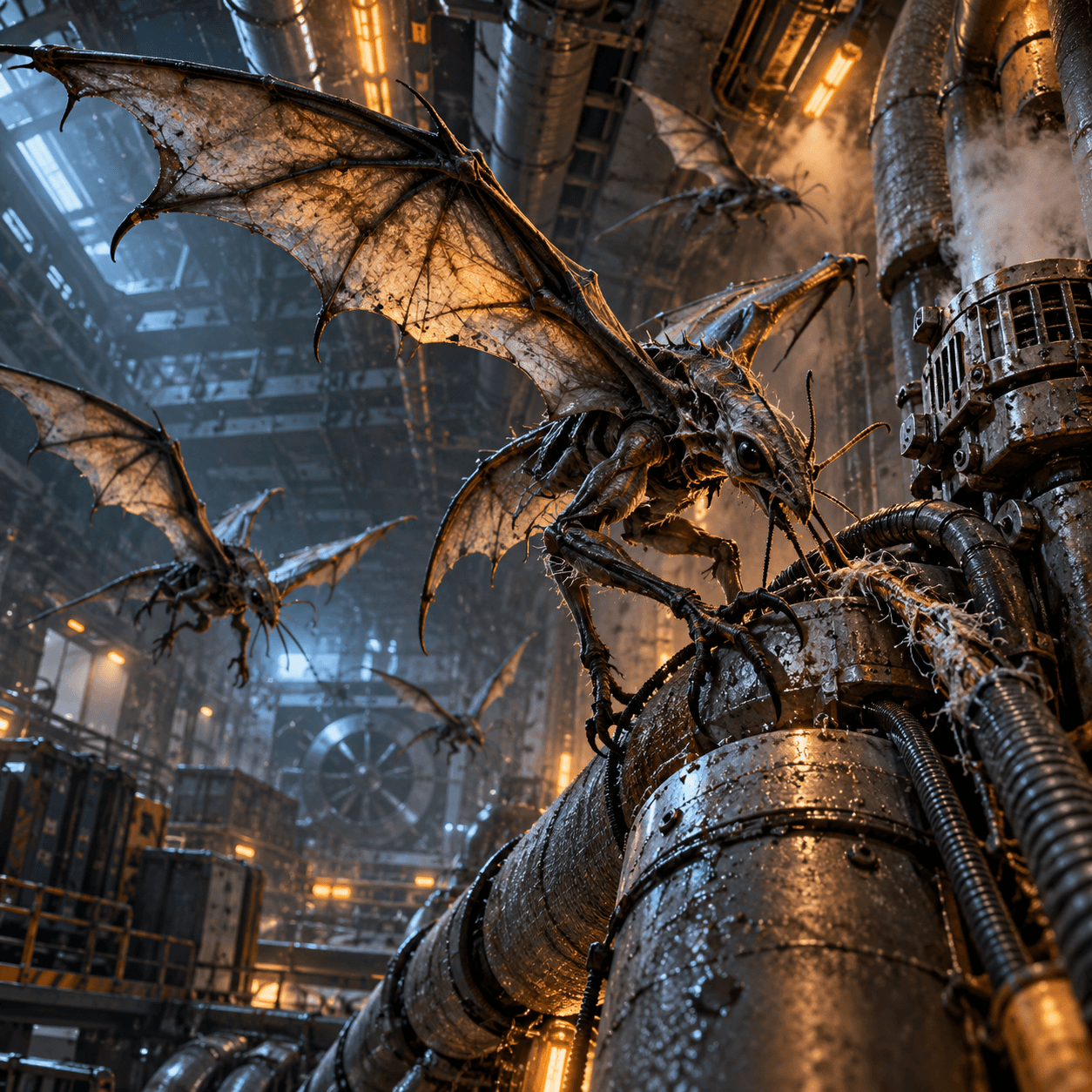
Hull Skimmers

low-gravity duct hunters

Hull Skimmers attacking exposed hoses in an industrial dock

Membrane-winged animals that glide through pressurized cargo spaces and nest around warm exhaust runs.

Habitat
Pressurized docks, cargo caverns and poorly maintained refinery habitats.
Hazard
They attack exposed hoses and regulators in flocks, confusing a maintenance emergency with a feeding rush.
Field response
Seal the airflow, kill the work lights and give them a colder route out. Chasing them deeper spreads the nest.

Steam Mantle

geothermal ambush predator

A Steam Mantle fused to a steaming mineral cave wall

A headless, mineral-crusted living mantle fused to hot, wet rock. It hides as salt lichen and stone until a breathing body passes within reach.

Habitat
Warm, humid geothermal caves and seep vents on Kharos-9.
Hazard
It detects warm exhalation and folds over prey, pinning it to a scalding seep before the victim can identify the wall as alive.
Field response
A sealed or rerouted exhaust can hide someone briefly. Moving air breaks its scent trail; outside the warm, wet zone it dries out and dies.

Lockjaw Sentinel

apex ventilation predator

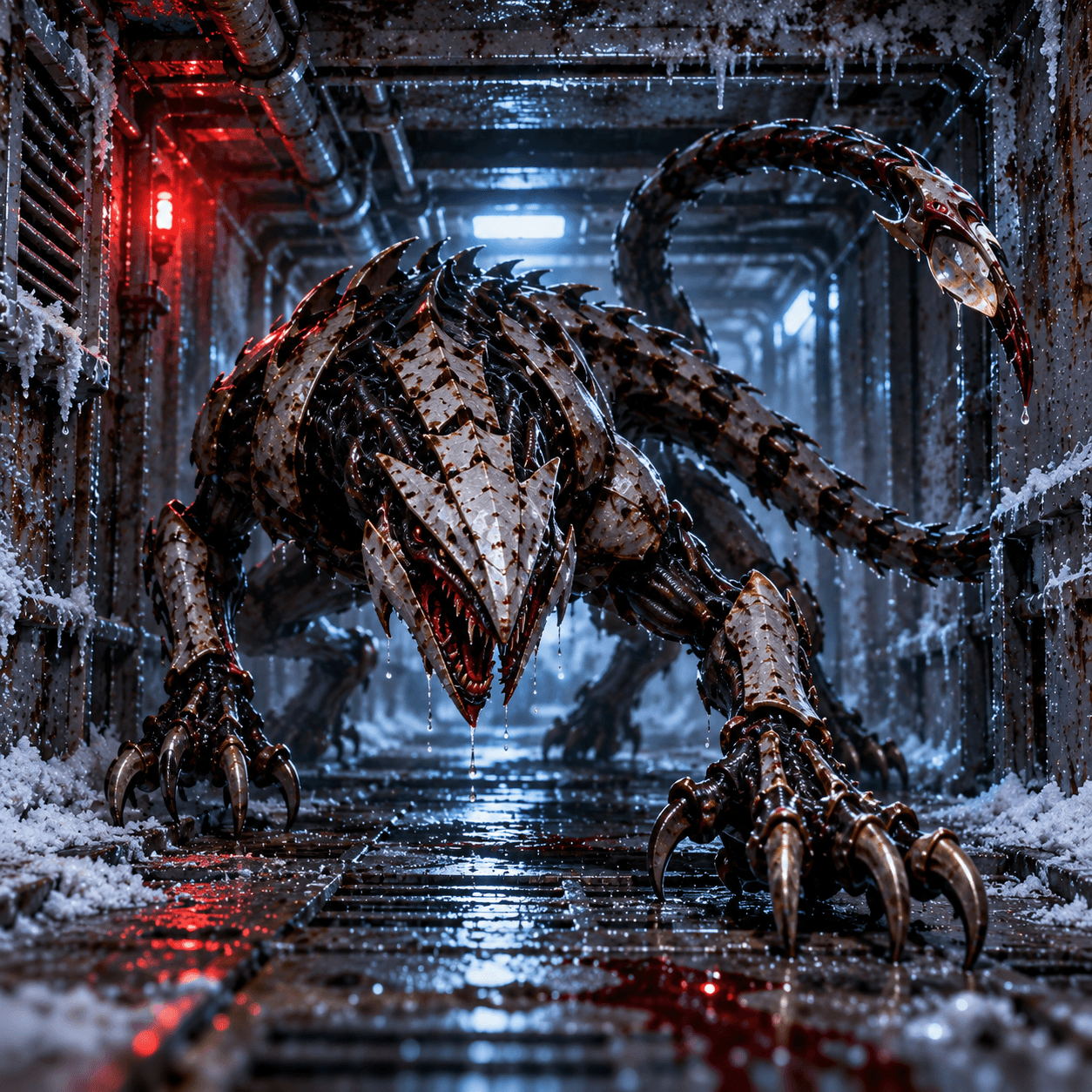
A Lockjaw Sentinel crouching in a frozen ventilation shaft

The most dangerous land predator on Kharos-9: a compact, panther-sized alien hunter built for silence, sudden acceleration and confined metal spaces. Its rust-dark chitin and layered plates mimic abandoned locks, braces and duct ribs until the structure moves.

Habitat
Abandoned polar stations, ventilation shafts, maintenance ducts and pressure-lock corridors, especially around the derelict P-14 facility.
Hazard
It attacks from blind angles with an inner jaw and hooked foreclaws. A flexible tail ends in a venomous stinger that can puncture suit joints; the venom brings rapid loss of coordination before the kill.
Field response
Never enter a duct alone. Keep a clear retreat, scan for breathing-space movement and do not trust any motionless lock, rib or service plate. Flooded light and open distance reduce its advantage, but do not make contact survivable.

Fibreplate

ice-plain apex predator

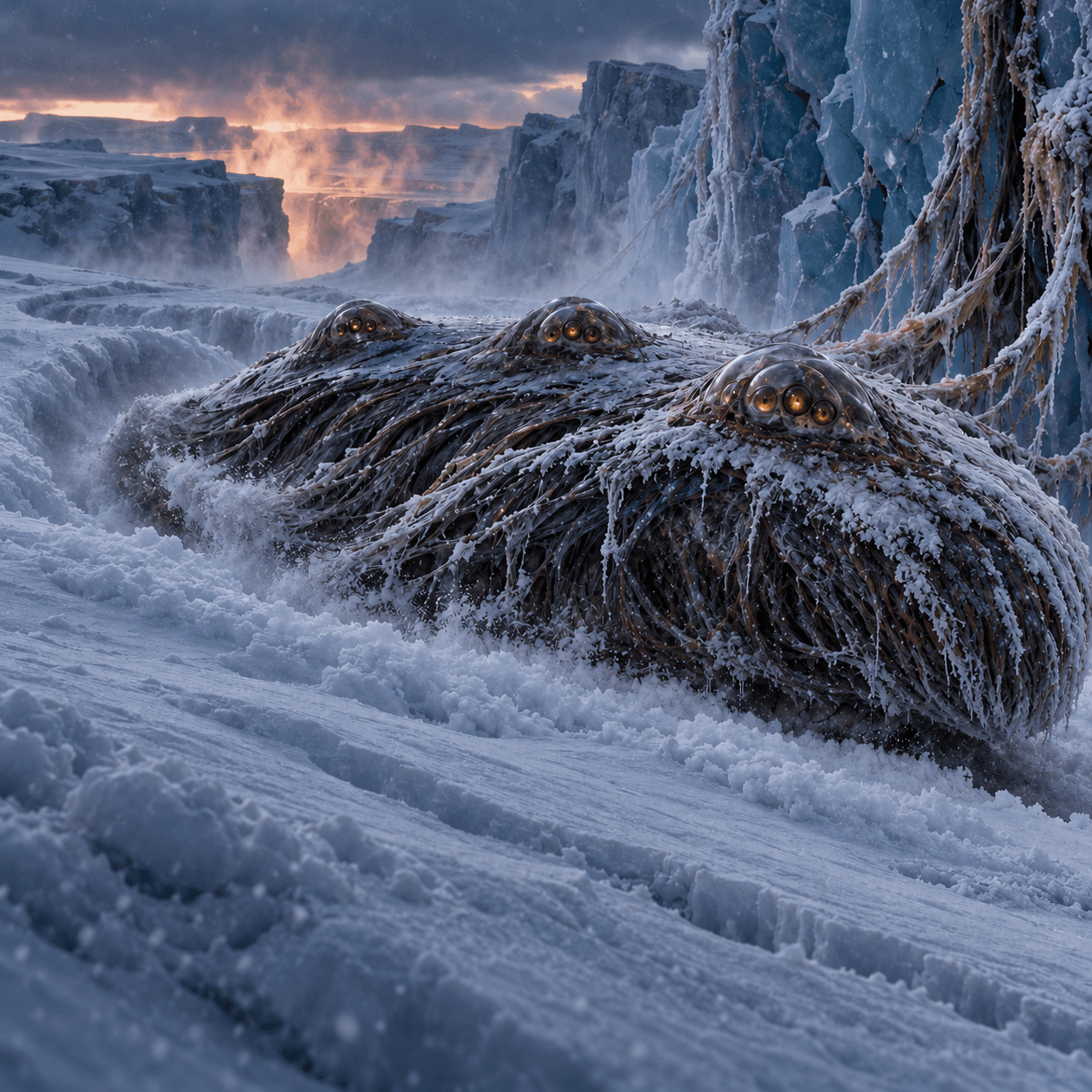
A Fibreplate swimming beneath snow on an ice plain

A broad, legless predator that swims through snow and firn beneath a mantle of hollow mineral-organic fibres. Its track is a collapsed, undulating tunnel, never footprints.

Habitat
Snowfields, firn slopes and the edges of ice fissures on Kharos-9.
Hazard
It watches through thin snow, erupts with its full mass and pins prey. Only then does the ring of jaw-plates beneath its body open.
Field response
Stay on smooth, solid ice or bare metal where it is slow. Heat, flame and abrupt pressure changes can disrupt it, but never safely for long.

Tremor Stalkers

vibration-hunting pack predators

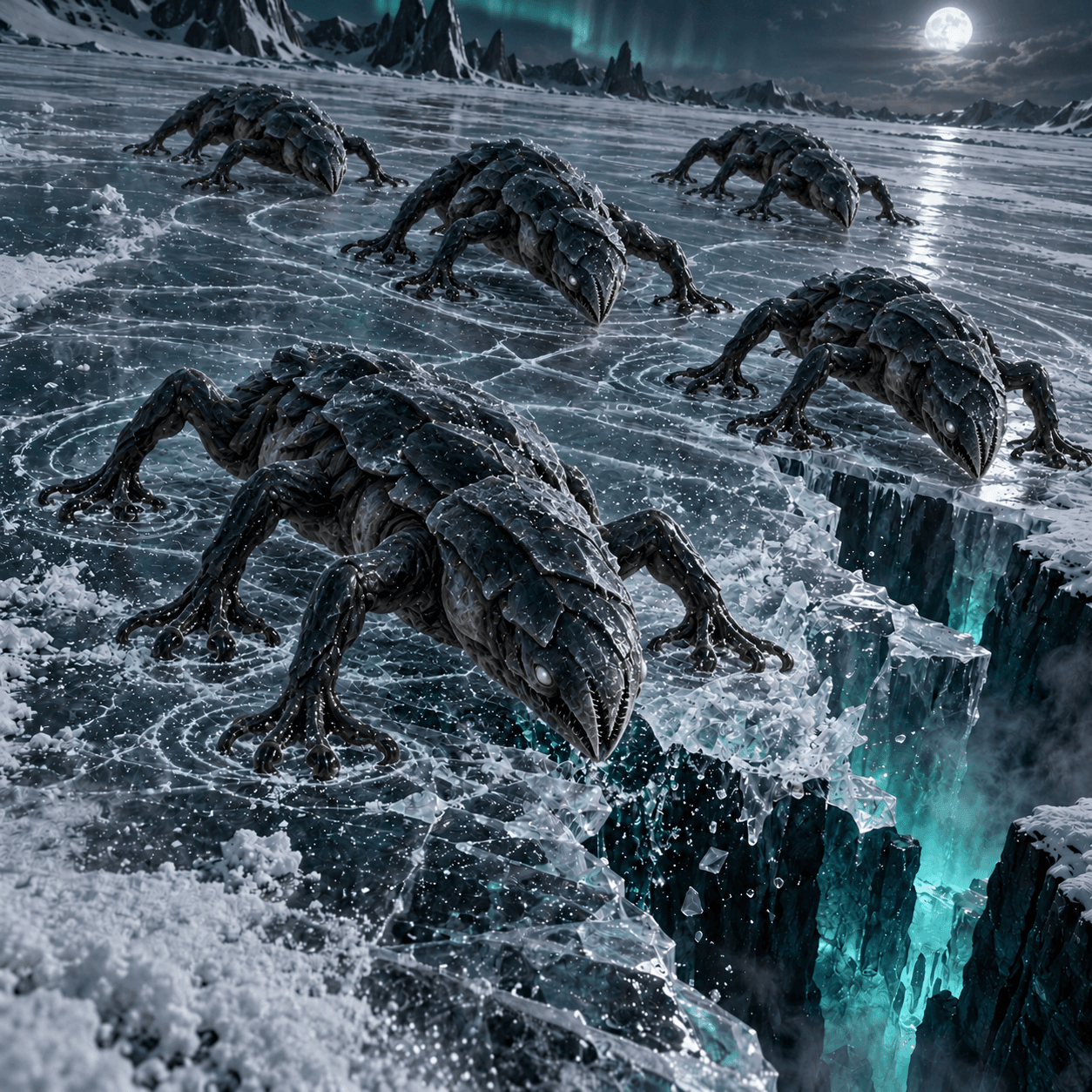
A pack of Tremor Stalkers hunting along a cracked ice shelf

Low, dark-ice armoured pack hunters with six lateral limbs. Their milky eyes see little; sensory plates along their flanks read every vibration carried through ice.

Habitat
Thin ice, storm-scoured plains, shafts and tunnel mouths on Kharos-9.
Hazard
A pack herds prey toward fissures, drills thin ice beneath its weight and attacks exposed suit lines from the flank.
Field response
Hold still on thick, silent ice when possible. Irregular broadband noise disrupts the pack, while metal and warm dry surfaces deny it purchase.

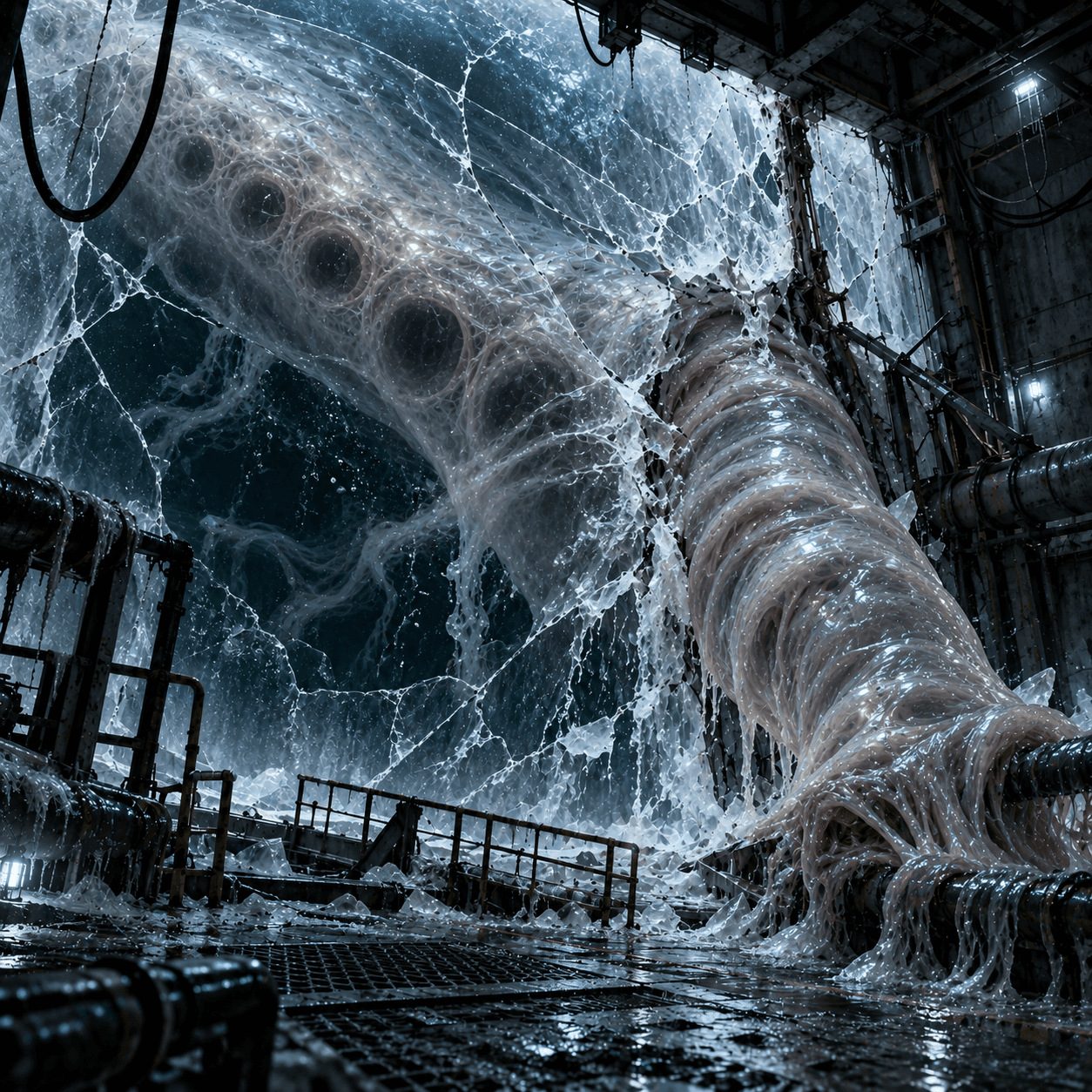
The Pale One

unknown sub-ice ocean predator

The Pale One pressing a living siphon-limb through fractured ice

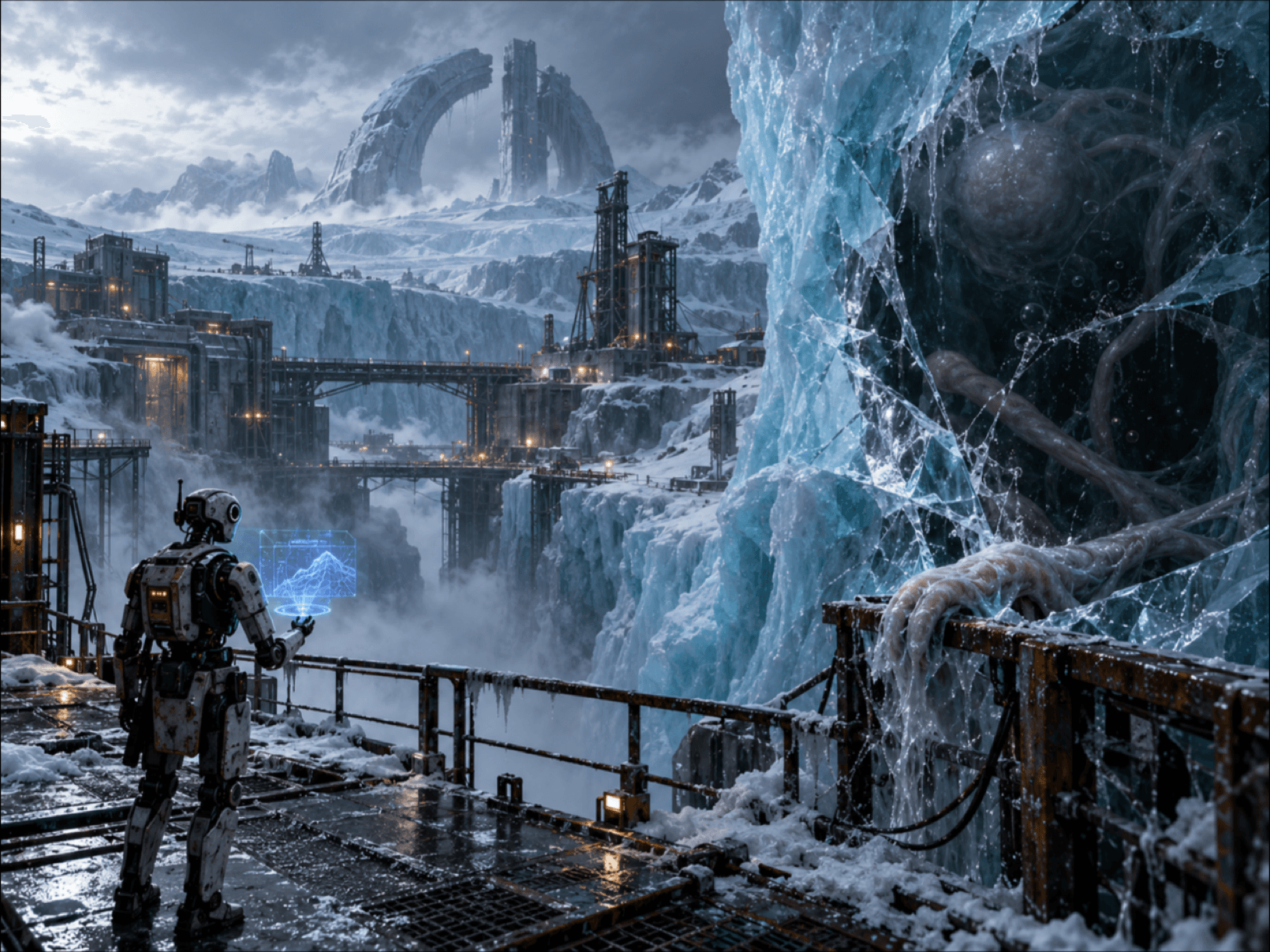
A pale, pulsing mass of unknown scale glimpsed beyond thin ice or a breach membrane. Its dark circular pits are sensory organs, not eyes.

Habitat
Kharos-9's sub-ice ocean, particularly thin ice and flooded industrial chambers.
Hazard
It presses against ice and forces peristaltic siphon-limbs through cracks, gripping rails, ice and suits before dragging prey into the water.
Field response
It cannot break thick solid ice or hunt on dry land. A hard freeze and sharp pressure drop force it back; the objective is escape, never a kill.

Characters

Choose who you become.

Scenarios

Adventures available now.

The Border of Accord
hardFull & Light

The Border of Accord

Two intelligent civilizations discover they are using the same partially reactivated node, and each makes a rational, conflicting claim to access and control. Neither side caused the reactivation. Your mandate is deliberately limited: you gather observable facts, weigh both claims against the records — independent telemetry precursors, human-versus-alien logs, prior-presence records, local administration and trade documents, and a border-incident report — and prepare a formal recommendation. You hold no executive power, you do not settle ownership, and you do not negotiate a treaty for the whole Confederation; prior use is not automatic ownership, and credibility is not ownership. Your options: exclusive human control, temporary or shared conditional access, or restricted access — a political and security restriction, never a technical shutdown of the network. The proper Confederation body then formally responds.

Play
The Last Colony
hardFull & Light

The Last Colony

A colony built some forty years ago around a single transit node is losing its reason to exist: a phased reactivation has opened an alternative route that bypasses its system, and traffic is draining toward the cheaper, more convenient passage. No person or faction opened the new route — it was part of the network's phased reactivation, and there was an earlier observable precursor. Gate Zero still works; the problem is the economic and logistical pull of the new route, and keeping the old one alive would need political and economic support. As the investigator you weigh human responsibility — including a warning that was received and deliberately delayed to avoid a costly reaction — and prepare a formal recommendation: keep the colony and the old route, evacuate, or limit support. The proper Confederation body must formally consider and answer it.

Play
Signal from the Deep
standardFull & Light

Signal from the Deep

Echo Station has logged a repeating, measurable pattern of disturbances tied to a node that is officially inactive. It is not a message, not communication, not the voice of the First Ones — it is a phenomenon you can measure, compare and correlate with the station's own technical history. As the investigator you gather the telemetry, the infrastructure records and the precursor-to-disturbance sequences, weigh how human institutions judged the risk and whether warnings were minimized, and prepare a formal recommendation: isolate the node, allow controlled research without activation, or adapt to an ongoing risk. The proper Confederation body then formally answers.

Play

Stories

Tales from this world.

Read all stories
Rust RibsSCI FI
🎧

KHAROS-9, P-14

Rust Ribs

Two Guardians of the Trace and a small recovery crew descend into an abandoned military base to pull out one recording — and find the only road to the lab runs, metre by metre, through the nest of the deadliest predators on Kharos-9.

48 min read · 🎧 55:25
Read
The White ThresholdSCI FI
🎧

2387

The White Threshold

On a frozen penal world, a Confederation assessor descends toward six people trapped beneath the ice. Each predator and bulkhead takes a resource, and the real battle is over who has the right to the shelter — and who signs for opening it.

71 min read · 🎧 1:31:19
Read
The ReliableSCI FI
🎧

2387

The Reliable

At a dead service ring, four specialists race to rescue survivors from a collapsing wreck. The log they came to claim records something more dangerous than a route: a breach into the unknown.

30 min read · 🎧 35:18
Read
The Last VectorSCI FI
🎧

2387

The Last Vector

When a convoy's transit geometry shifts near an ancient node, Marek Solari breaks an order to catch a drifting freighter. Saving it will cost him the one machine that made his life independent.

34 min read · 🎧 43:12
Read

Step into the world