



 SCI FI
2387
The Last Vector
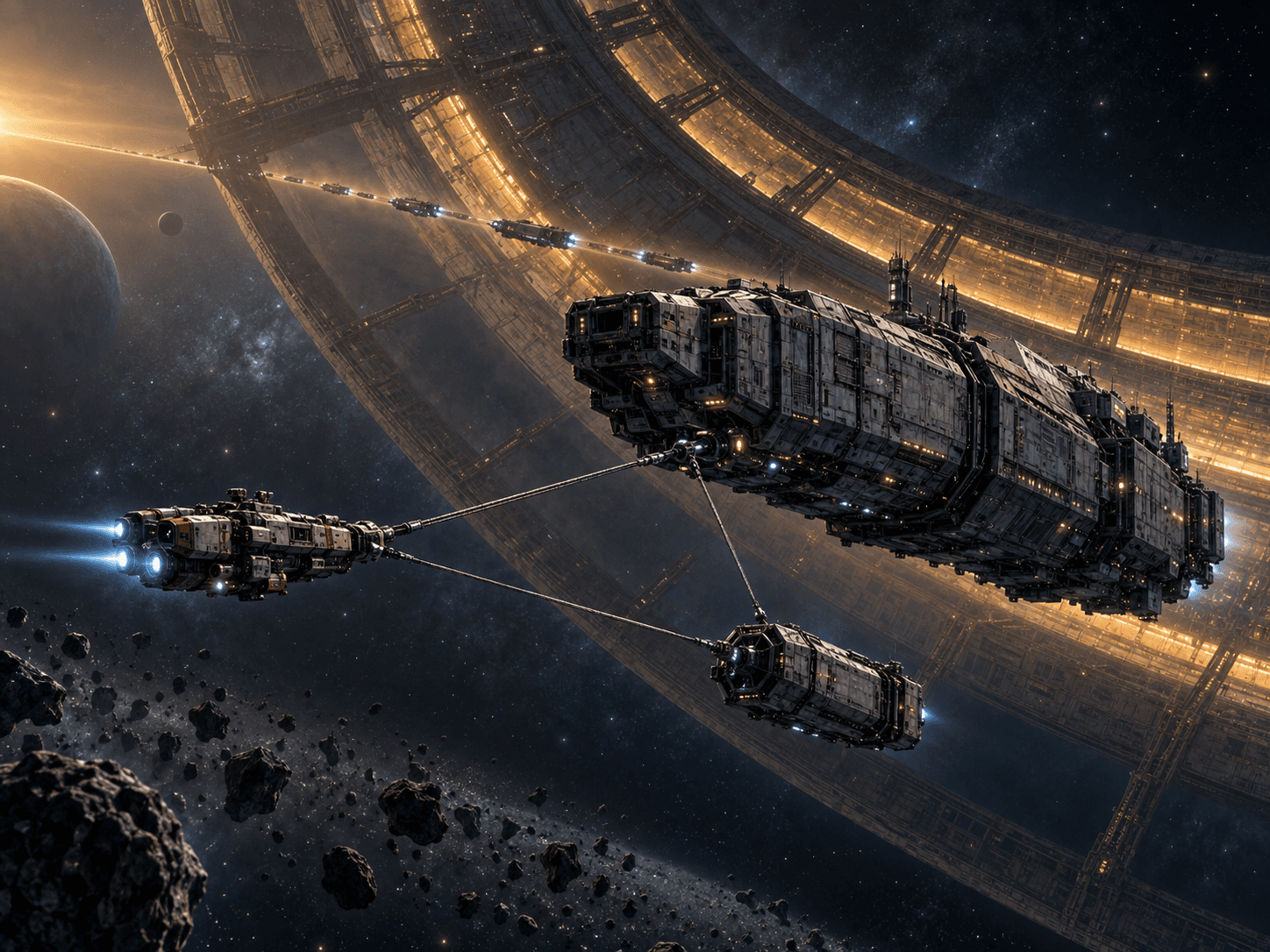
When a convoy's transit geometry shifts near an ancient node, Marek Solari breaks an order to catch a drifting freighter. Saving it will cost him the one machine that made his life independent.
34 min read
Read🎧 Soon
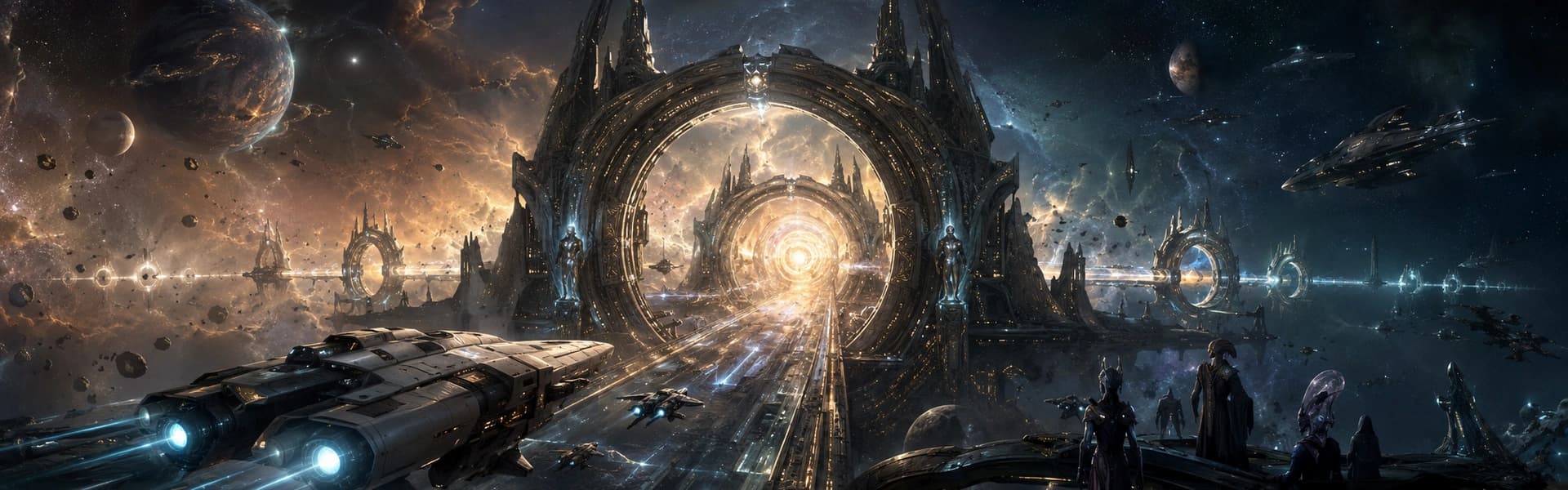
Year 2387. Humanity has settled 47 solar systems, linked by the Stellar Corridor — a network of passages the First Ones built roughly 1.2 million years ago and then left behind. The network is automatic material infrastructure: it has no mind and no will, its nodes lead to fixed destinations, and it has begun to reactivate in phases. The Confederation, formed forty years ago in answer to the first wave of reactivations, now faces the question that runs through everything: who has the right to decide which passages open, who may use them, and who bears the consequences?
Year 2387. Humanity has settled 47 solar systems, linked by the Stellar Corridor — a network of passages the First Ones built roughly 1.2 million years ago and then left behind. The network is automatic material infrastructure: it has no mind and no will, its nodes lead to fixed destinations, and it has begun to reactivate in phases. The Confederation, formed forty years ago in answer to the first wave of reactivations, now faces the question that runs through everything: who has the right to decide which passages open, who may use them, and who bears the consequences?
The First Ones built the Corridor network roughly 1.2 million years ago and vanished, leaving only the infrastructure; they are not a deus ex machina, and their disappearance is not a key that explains everything. Maps, remnants and node correlations suggest on the order of 300 systems in the wider network — an estimate, not a full list of what humans can reach. Other intelligent civilizations exist, but they are not catalogued here as a roster of races. The network is automatic material infrastructure: no consciousness, no will; it does not choose peoples or civilizations, does not react to emotion, and does not learn the player. Its nodes have concrete destinations and three states — inactive, active stable, active unstable — and reactivation proceeds in phases, every scenario-level change of activity, routing or stability preceded by an observable precursor. Modern civilizations can use, diagnose and partly repair the infrastructure, but cannot reproduce the whole technology of the First Ones. The Confederation formed about forty years ago as a political response to the first wave of reactivations. At heart the Stellar Corridor is infrastructural expansion without sufficient knowledge — and the politics of who controls it.
Territory, routes and pressure points.
Cartographic layer in progress
This world does not have a public map asset yet.
Choose who you become.
Adventures available now.
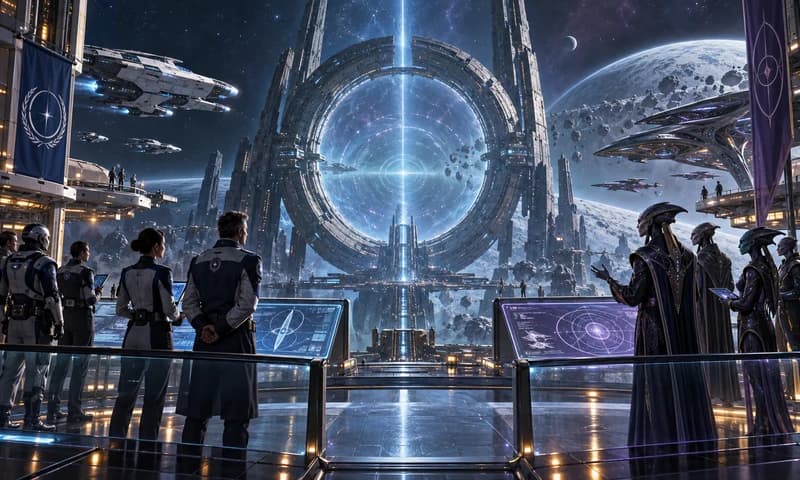
Two intelligent civilizations discover they are using the same partially reactivated node, and each makes a rational, conflicting claim to access and control. Neither side caused the reactivation. Your mandate is deliberately limited: you gather observable facts, weigh both claims against the records — independent telemetry precursors, human-versus-alien logs, prior-presence records, local administration and trade documents, and a border-incident report — and prepare a formal recommendation. You hold no executive power, you do not settle ownership, and you do not negotiate a treaty for the whole Confederation; prior use is not automatic ownership, and credibility is not ownership. Your options: exclusive human control, temporary or shared conditional access, or restricted access — a political and security restriction, never a technical shutdown of the network. The proper Confederation body then formally responds.
Play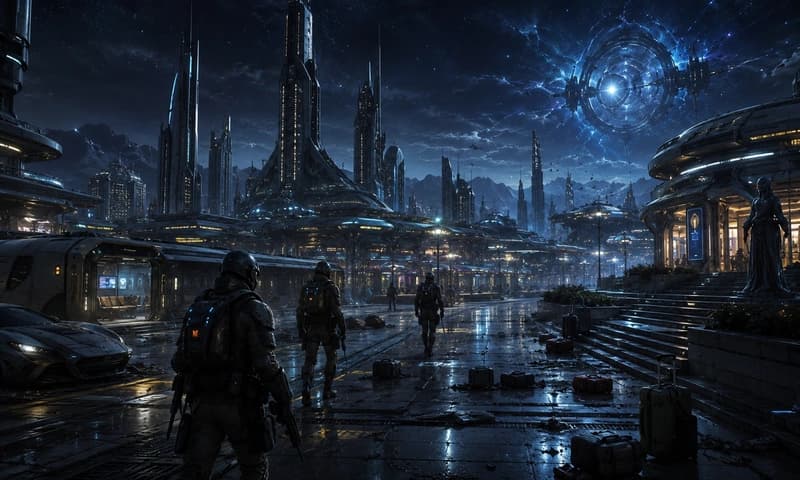
A colony built some forty years ago around a single transit node is losing its reason to exist: a phased reactivation has opened an alternative route that bypasses its system, and traffic is draining toward the cheaper, more convenient passage. No person or faction opened the new route — it was part of the network's phased reactivation, and there was an earlier observable precursor. Gate Zero still works; the problem is the economic and logistical pull of the new route, and keeping the old one alive would need political and economic support. As the investigator you weigh human responsibility — including a warning that was received and deliberately delayed to avoid a costly reaction — and prepare a formal recommendation: keep the colony and the old route, evacuate, or limit support. The proper Confederation body must formally consider and answer it.
Play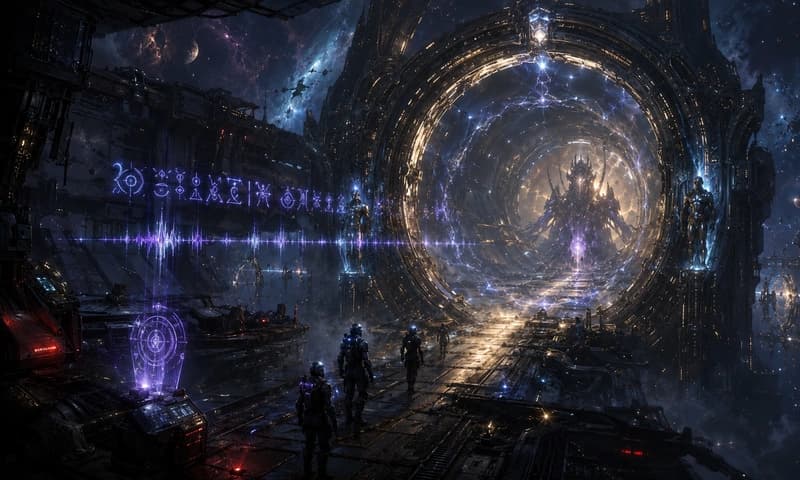
Echo Station has logged a repeating, measurable pattern of disturbances tied to a node that is officially inactive. It is not a message, not communication, not the voice of the First Ones — it is a phenomenon you can measure, compare and correlate with the station's own technical history. As the investigator you gather the telemetry, the infrastructure records and the precursor-to-disturbance sequences, weigh how human institutions judged the risk and whether warnings were minimized, and prepare a formal recommendation: isolate the node, allow controlled research without activation, or adapt to an ongoing risk. The proper Confederation body then formally answers.
PlayTales from this world.
SCI FI2387
The Last Vector
When a convoy's transit geometry shifts near an ancient node, Marek Solari breaks an order to catch a drifting freighter. Saving it will cost him the one machine that made his life independent.
Visuals from this world.
World key art
The Stellar Corridor
Scenario art
The Border of Accord
Scenario art
The Last Colony
Scenario art
Signal from the Deep

Step into the world